Nell Baran
Game & Level Designer
Searching for a position to express my passion for design, creativity, and inspiring the next generation!
Venatrix the Werewolf
Venatrix the Werewolf is an upcoming video game about a girl hell-bent on avenging her sister's murder, only to become the very monster she hunts.
2D Supernatural Fantasy Platformer - Personal project
Star Squid
Play as a space faring squid who must shoot the constellations back into the sky!
CG Spectrum Q1 2026 Game Jam
Viridian Prime
Join the crew of humanity's last hope and fight for peace among alien nations!
CG Spectrum Term 1 Final Project
Nell Baran
Game & Level Designer
Searching for a position to express my passion for design, creativity, and inspiring the next generation!
Star Squid
Star Squid was created during the CG Spectrum Q1 2026 Game Jam by a team of three artists and two developers. Over a time crunch of five days, we put together a functional game following the theme of "Not a Shooter Shooter". As this was most of the team's first Game Jam, our group goal was to create a functional, playable game within the time constraint - a goal that we met successfully.
My contributions include concept planning, UI/UX design and implementation, and level design.
Level Design
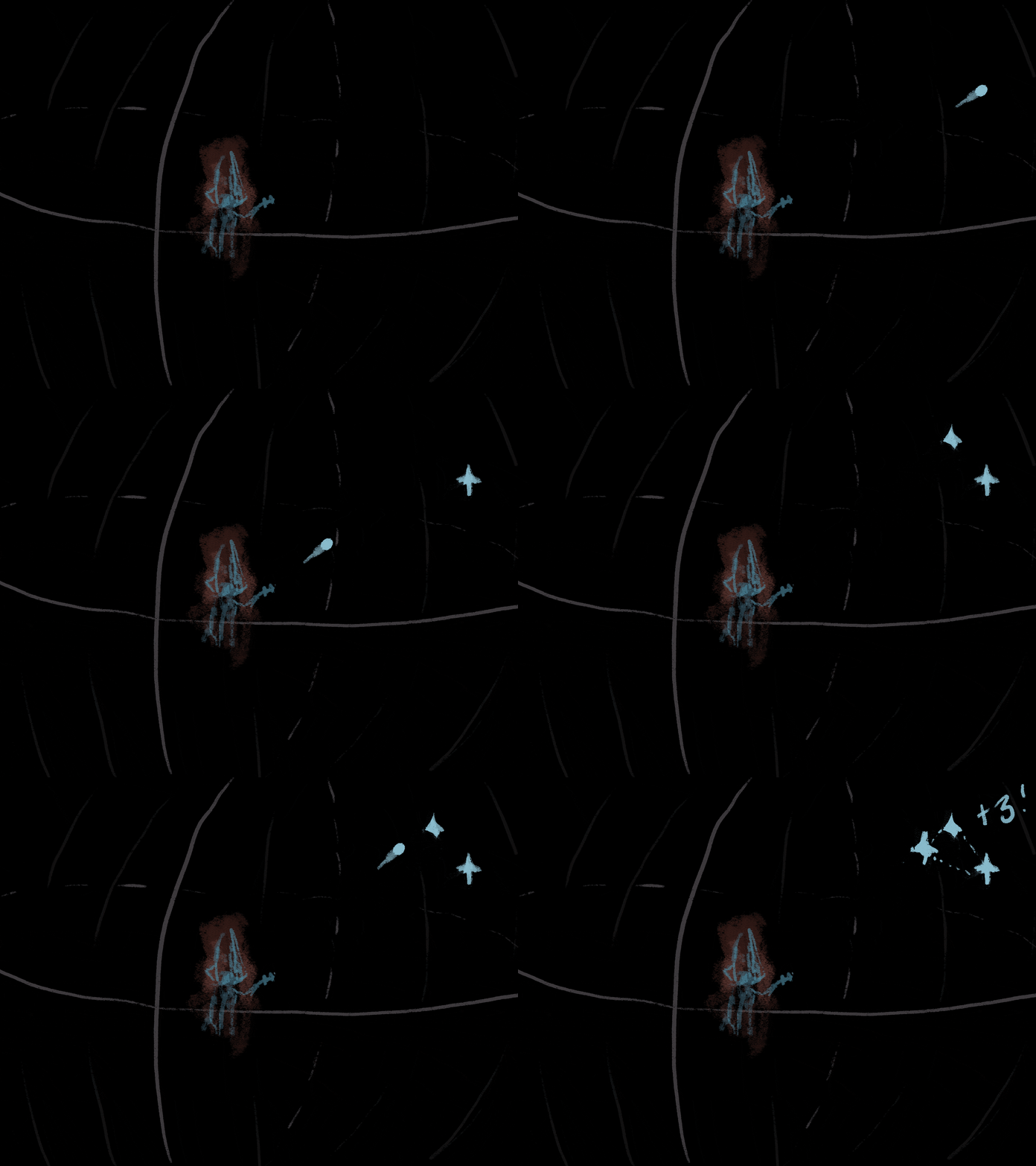
In designing and placing the constellation patterns, I wanted to mimic the ones we know, and their approximate places in the celestial sphere. For simplicity's sake, I decided to keep the constellation patterns as they'd be seen from Earth (as opposed to from the Squid Nebula), so that the patterns would be more recognizable to the player. I prioritized the most well-known constellations - Ursa Major and Minor and the Zodiac constellations. The points earned for each star correlate with the target's size - in creating the constellation patterns, I chose the target size to match approximately with the star's real-life approximate brightness.
Initially, we planned to have constellations spawn in, linger for a period of time, and then vanish if the player failed to hit each star target. Players would receive a bonus for each constellation they completed. However, due to the time constraint, it was more feasible to place the constellations on the inside of the sphere for the duration of the level. The constellation bonus was successfully implemented. Later on in development, we decided to use a level timer to create a sense of urgency for the player.
UI Design
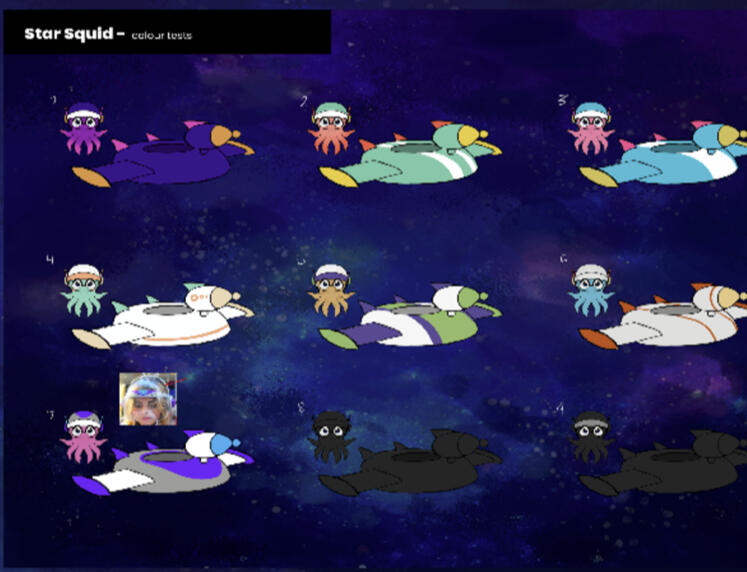
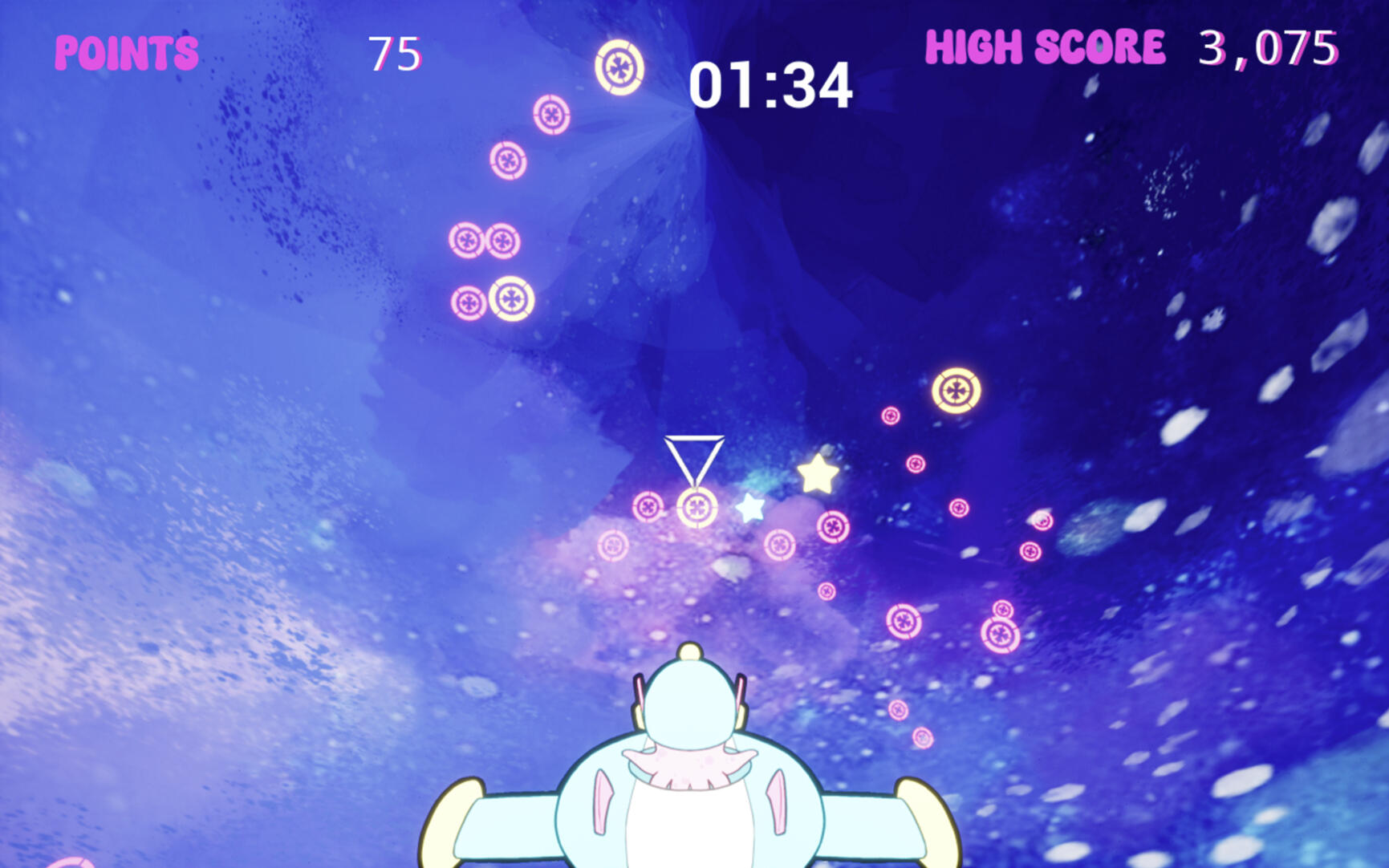
This was my first time designing and implementing UI. I wanted to create an interface that was cohesive with the rest of the game's design. Our concept artists had gone for bright, playful colors and a whimsical design for the player character. To emulate this, I chose a fun, rounded font for certain text elements, and a bright pink that stood out against the space background. While the numbers remained in Unreal Engine's default Roboto font, I added a similarly-colored pink shadow offset to keep with the color scheme and make the points and high score stand out.
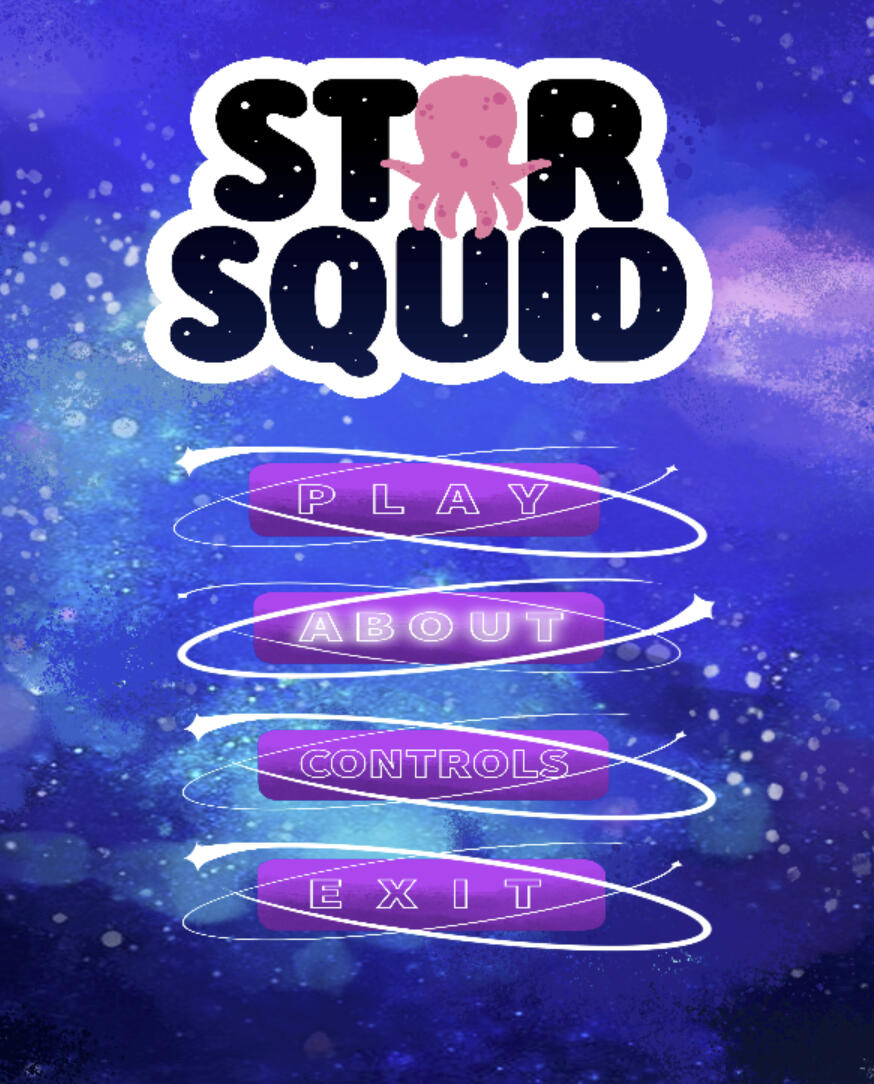
I designed the buttons on the Main Menu screen to reflect the color choices and whimsical space theme of the game as well. The "hovered" design is meant to give the impression of the stars around the button moving as the player interacts with the menu. This and the glowing text indicates which button is currently selected, and adds aesthetic "juice" to the menu screen.
Concept & Design
Before the official Game Jam timeline, we were able to use the few weeks in between the formation of the team and the start of the Jam to begin planning. To do this, we created a brainstorming document in which we all pitched a few different ideas, and - after we landed on the concept of Star Squid - a Game Design Document where we delved further into the idea of our interstellar mollusk. I pitched idea of a space-themed game, which I owe to my background as an astrophysicist, and the idea of a squid as the player character was inspired by the Squid Nebula. By the time the Jam was upon us, we had divvied up responsibilities for the team and got quickly to work!
We knew that we would be working in Unreal Engine 5.6 to create one level in which a stationary player shoots "stars" at targets in patterns of missing constellations that had vanished from the sky, earning points for each hit and completed constellation. The player competes with their own high score, and wins by successfully hitting all the targets.GIF concept by me; color test concepts by Aurelie Drapeau
Nell Baran
Game & Level Designer
Searching for a position to express my passion for design, creativity, and inspiring the next generation!
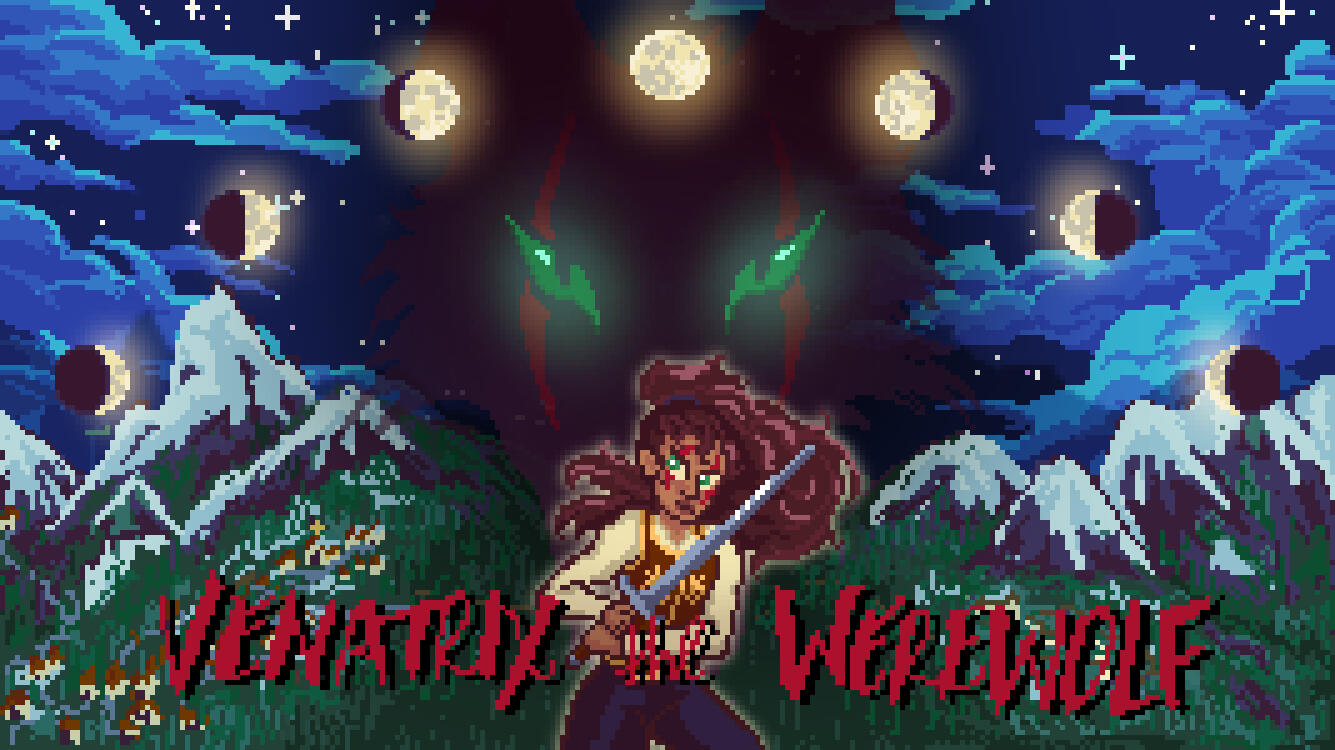
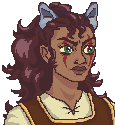
Venatrix, a young warrior, hunts the werewolf Fenrir to avenge her younger sister's death; however, she bites off more than she can chew when the wolf bites back. Little does she know, she's not the only one hunting wolves...
Platformer | Light supernatural fantasy | 2D pixel art
Venatrix the Werewolf
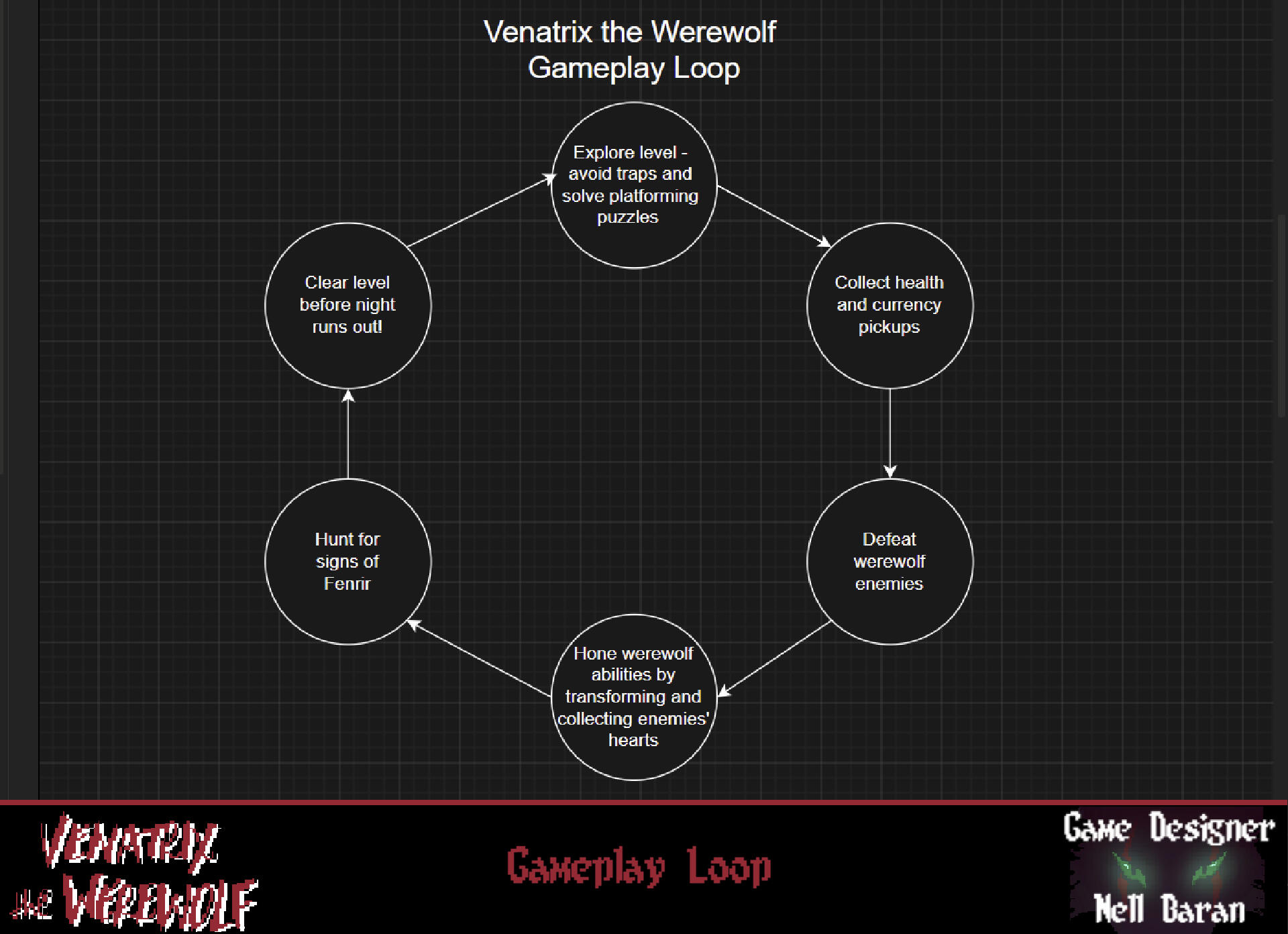
Venatrix the Werewolf is a personal project that I started as a means for testing the game and level design concepts I learned at CG Spectrum (and from a variety of online sources as needed). Having one central project to direct my focus towards has helped me to get a stronger sense of designing systems that interlock and work together. This demo consists of 5 levels, where we explore Venatrix's newfound werewolf powers and reinvigorate the hunt for the murderous beast.
Pillars
- Dynamic human and lupine abilities- Hunt down enemies via platforming exploration and combat- Beware the phase of the moon!- A story line featuring themes of grief and queerness
Concept and Design
Venatrix's story has existed in my head for a while, in a variety of different iterations. I decided to play around with converting it into a video game format in in order to put into practice what I learn in class. The core of this game is Venatrix's werewolf abilities, how they affect her, and her inner turmoil about them.
The overarching game structure consists of 3 acts with 10 levels each. Every 5 levels, the player will fight either a boss or mini-boss and explore a different area.
Metrics Study
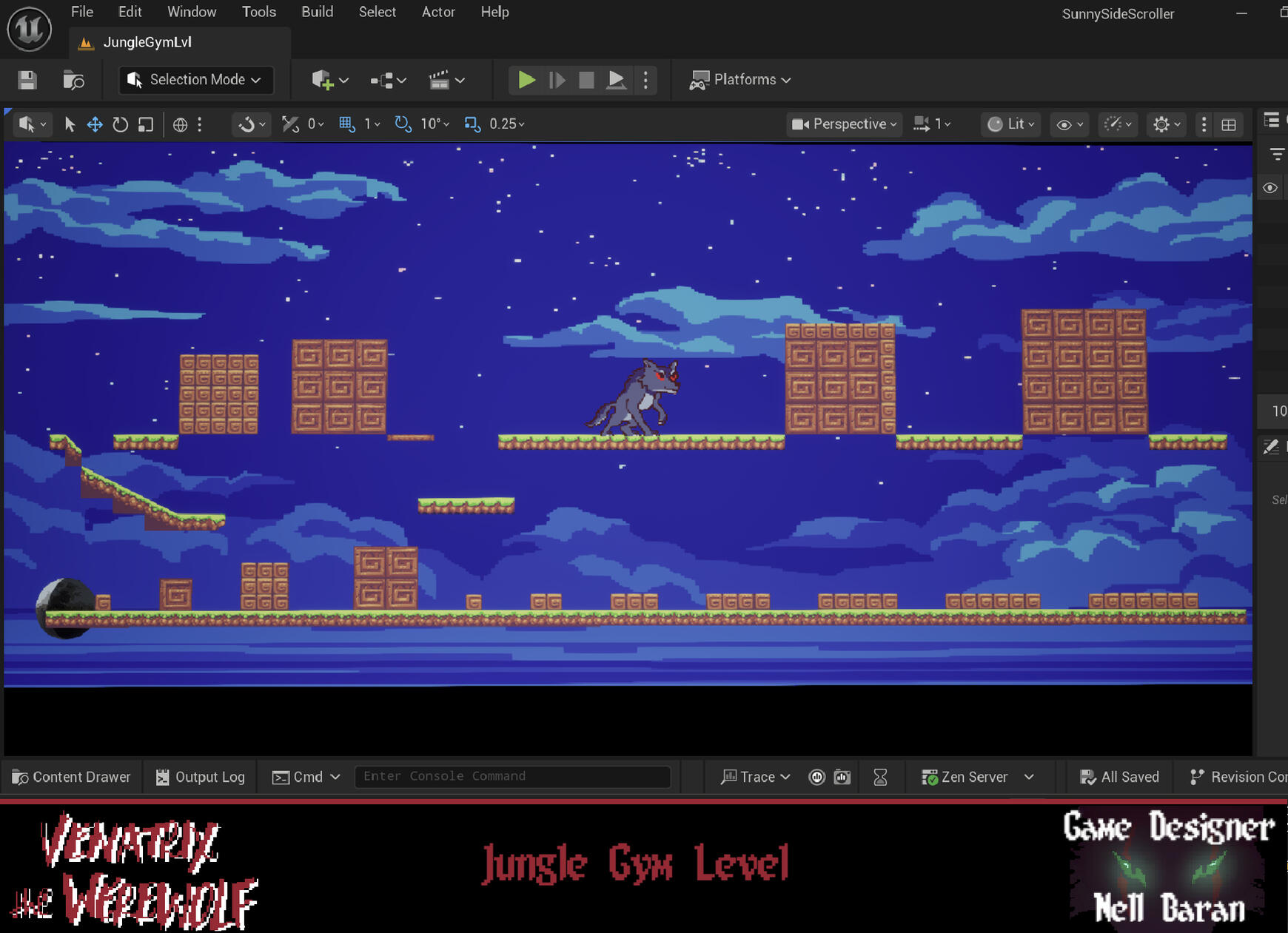
Before jumping into design, I created a jungle gym level so I could gauge the metrics for Venatrix's jump heights and distances, as human and wolf, and the wolf's dash distance.
Level Design
As a platforming game, typical platforming elements are encorporated into each level - moving platforms, doors, switches, pickups, spring platforms, etc. Hazards (turrets, spike traps, fire, enemies) are scattered throughout levels to test the player's skills in avoidance, strategy, and combat timing. Pickups are placed and spawned strategically to guide the player in gameplay decisions, such as which elements will be more easily completed as a wolf vs as a human - certain pickups can only be consumed in human form and vice versa. Certain gaps and levels may only be reached with the wolf's jump height or dash abilities.
Levels are designed to be completed by both human and wolf, though remaining human adds an increased difficulty. This is done to encourage a variety of different play styles! For example, players who like harder difficulty can remain human throughout the game (barring full moon nights). Speedrunners can maximize their wolf speed to avoid enemies and whiz over hazards (keeping in mind new moon nights where wolf transformations are disabled). Min-maxers can rid each level of enemies and max out their health by consuming their hearts. Through each level, the player must strategize how they wish to overcome challenges, driven by the phase of the moon.
Systems Design
The core pillars of Venatrix the Werewolf revolve around her abilities as a werewolf and a human, and how those relate to the environment - thus, when starting to prototype, these were the systems I needed to figure out first.
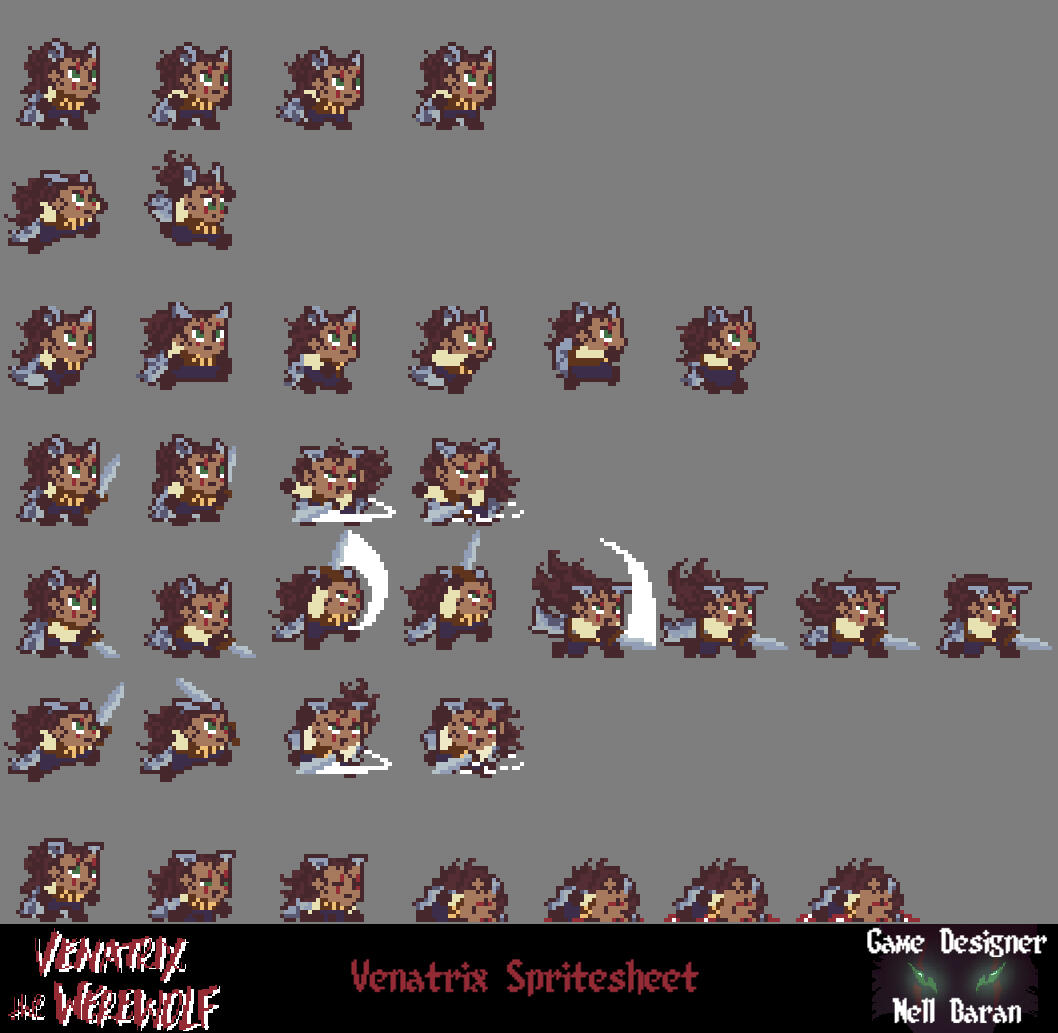
Using the PaperZD plugin, I set up the sprites and animations for both human Venatrix and werewolf Venatrix (with the help of numerous youtube tutorials - special shoutout to CobraCode!), and employed the plugin's new animation skin system - couldn't have been released at a more perfect time! The player transforms simply by pressing 1. Later, I added more abilities and attacks to both human and wolf - a "dash" ability for the latter, and primary and secondary attacks for both. The primary attack is a simple melee slash (sword or claw respectively), with the wolf's dealing slightly more damage. The human's secondary attack is a jumping slash, which deals outward radial damage, while the wolf's secondary attack is a lunging bite, which launches the player forward and deals a significantly larger amount of point damage. As of right now, the player does not have ranged attacks - the larger damage radius for the human's secondary and the forwards launch of the wolf's secondary combat the longer range of bosses.
Platforming elements were designed according to the instruction given in my CGS course, with some extra bits and bobs (i.e. adding heal over time to the mushroom pickup). Gems (currency) are included in the demo with future intent to build a simple store system that will be accessible during the second act of the game.
UI Design
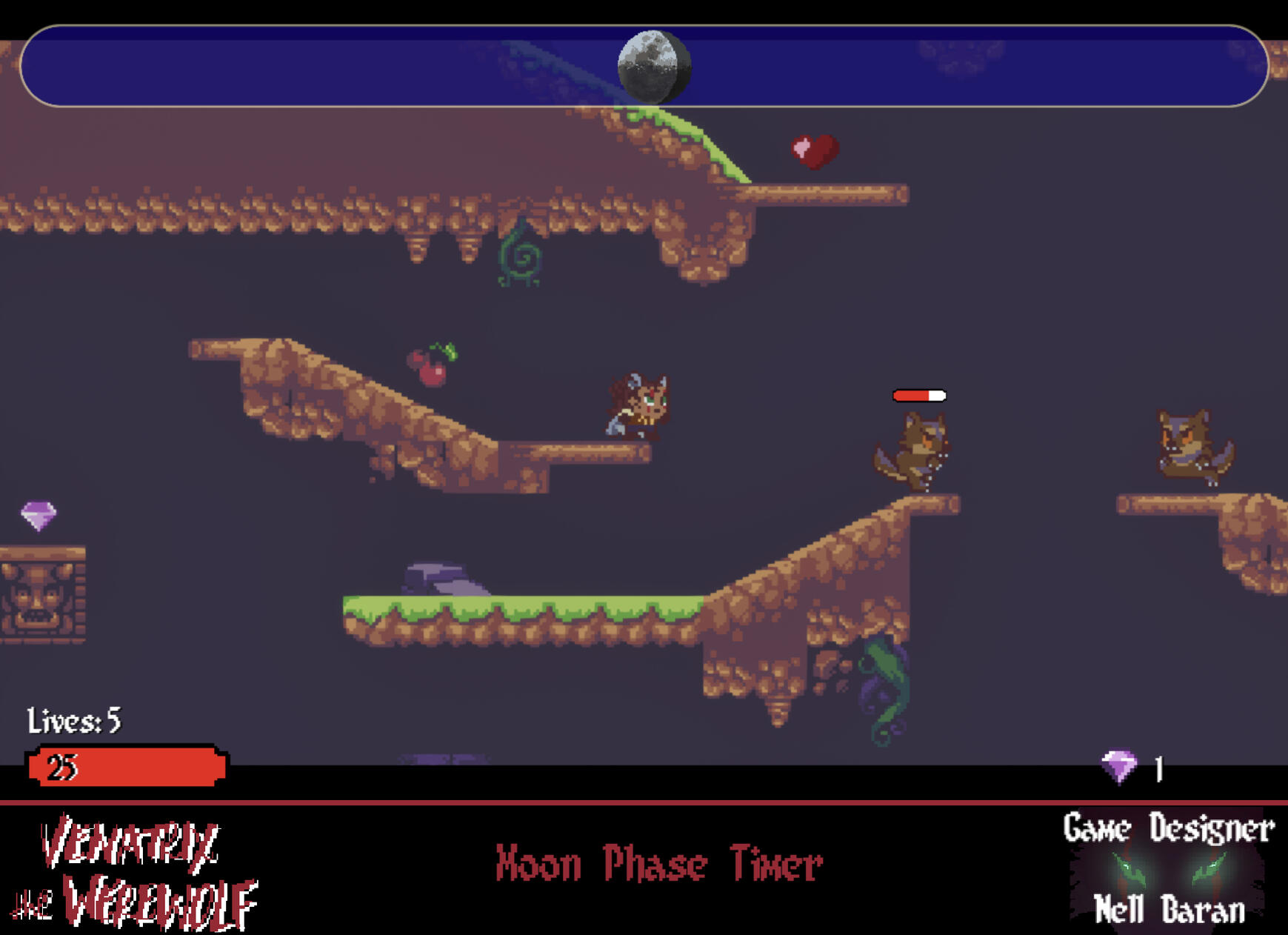
I chose to implement a simple UI for this game to reflect only what the player needs and not clutter the screen, featuring a health bar, lives, and a gem pickup counter. As the game itself is relatively simple, the UI must match. The pixel font (8 bit limit) also reflects the art direction of the game.
At the top of the screen, a small image of the current moon's phase acts as a timer. The level will restart at the end of the "night", as the nocturnal werewolf may only traverse at night. The phase of the moon also indicates how many lives it will take to transform into a wolf - and the ability to use the wolf moveset. This is critical information to the player! Initially, I did not have this information as part of the non-digetic interface, expecting the player to look at the actual moon within the game. However, during playtesting, I realized that the moon is not always visible in every level (i.e. when Venatrix explores the werewolf dens), so adding this element to the player's HUD was necessary.
Art and Assets
Because of my background as a hobbyist digital artist, I wanted to make a 2D game so I could include some of my own artwork! The current tilesets and FX come from asset packs that were free or paid for. The base character animations (idle, run, jump, fall, crouch) are repurposed from the Sunnyland Asset Pack, recolored to fit my character design. All attack animations were created by me (using the base poses as references). All sprites and animations of Fenrir were fully created by me. The title card and dialogue box images (not yet implemented in-game) were drawn by myself as well.
Assets used:
Pixel FX
Moon Phases
Sunnyland Assets
8-bit Limit Font
LegacyFantasyForest
pixel theme by Timmysnake
Pixel Song #11 by hmmm101 (Freesound)
Pixel Song #19 by hmmm101 (Freesound)
Pixel Song #21 by hmmm101 (Freesound)
Werewolf Growl by DRAGON-STUDIO
Halloween Wolf Howling by DRAGON-STUDIO
Nell Baran
Game & Level Designer
Searching for a position to express my passion for design, creativity, and inspiring the next generation!
The Secrets of Viridian Prime
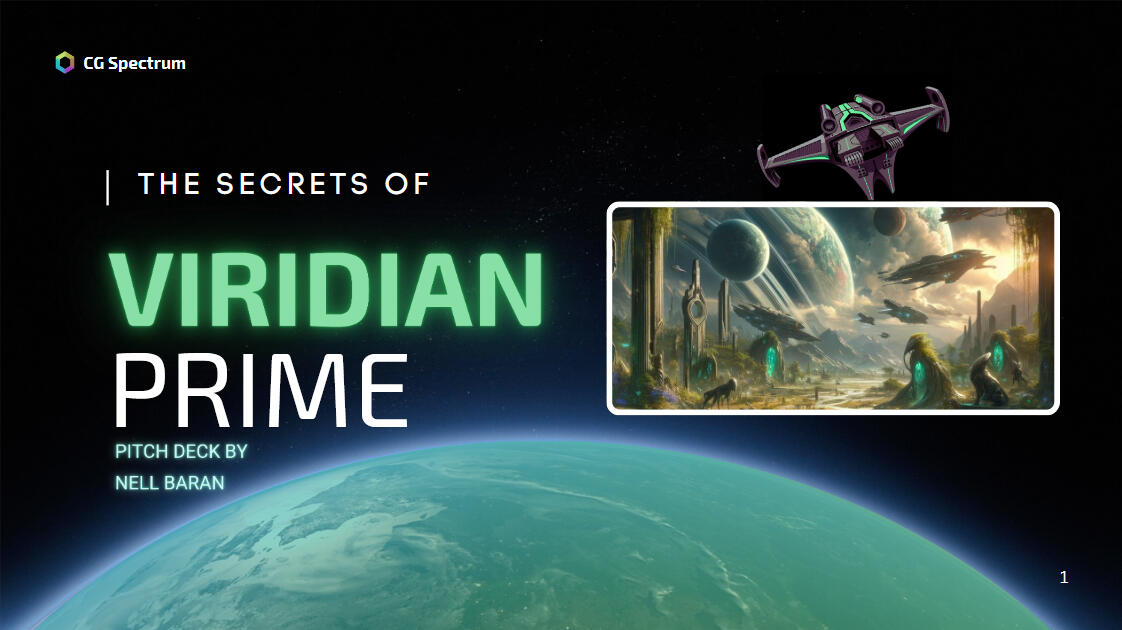
Crash-land into a rich, intricate interplanetary conflict hosted on the verdant yet deadly world of Viridian Prime, the last gleaming hope of survival for humanity. As you battle against the environment itself, forge alliances with the Viridis, natives of the rocky world, or the Sytharians, invaders of the planet, as each lay claim to its life-giving resources in a deadly campaign for survival. As beautiful as it is hostile, Viridian Prime will not be dormant in this conflict.
Viridian Prime is a single-player sci-fi RPG shooter that I designed as part of my first end-of-semester project at CG Spectrum. I was given a few optional base ideas to implement, which I decided to use as a way to test my skills with designing a game based on a given example IP.
The main goal of this project was to create a pitch deck, a game design document, and a few sample/tester levels.
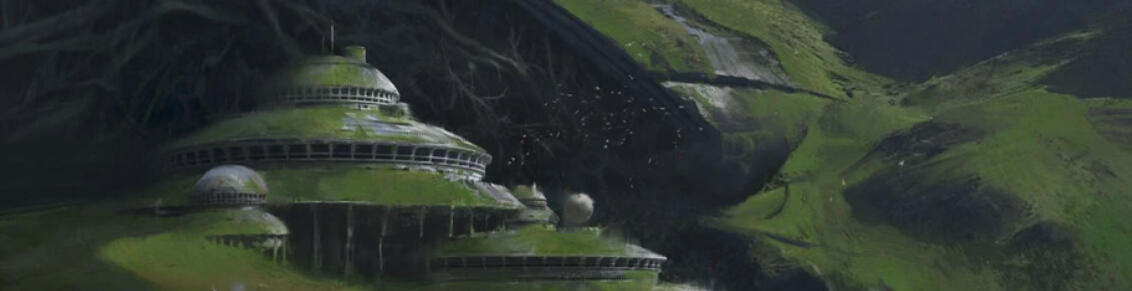
Viridian Prime places players in the shoes of humanity’s last hope. Plunge into a world only imagined in human myths, where forests hover above rocky lands, where megafauna roam the wilds, and where gravity is but a suggestion. Verdant visuals and poignant soundtracks will coat imagination in wonder, inspiring life, hope…and conquest. Dangerous flora and beasts inhabit unique terrains, but most deadly are the sentient races which lay claim to the planet - the Viridi, the Sytharians, and now, humans. With immediate survival at the forefront of the mind, you must carve a path through an interplanetary war, forge dynamic alliances, and make choices that shape the fate of the planet. Blending interracial diplomacy, tactical combat, and a breathing, dynamic narrative, Viridian Prime will lay bare the secrets of anyone who sets foot on its surface and echo the very truths that humanity wishes to ignore.
Game Pillars
- Interplanetary diplomacy - your choices determine the fate of the Viridi, the Sytharians, and humanity itself.- Explore a vibrant and vicious world that resists colonization from flora to fauna to physics.- New styles of agile, low-gravity movement, combat, and acrobatics.- Reawaken alien biotechnology that responds to your movement and the planet itself.
Game Design
I was given some worldbuilding documentation about a planet called Viridian Prime that was being invaded by a warlike alien race called the Sytharians. The basic premise involved the player's starship crash-landing in the midst of this conflict.
I decided to keep this general concept - in order to give the project my own unique flair, I completely redesigned the characters, narrative, and embellished the environment to include more unique gameplay ideas. I started with the premise that Viridian Prime has less surface gravity than Earth, which immediately affects player movement, level design, and environmental look for the entirety of the game. The game will feel different - players will learn aerial and acrobatic moves, along with alien technology that allows them to take advantage of this environment.
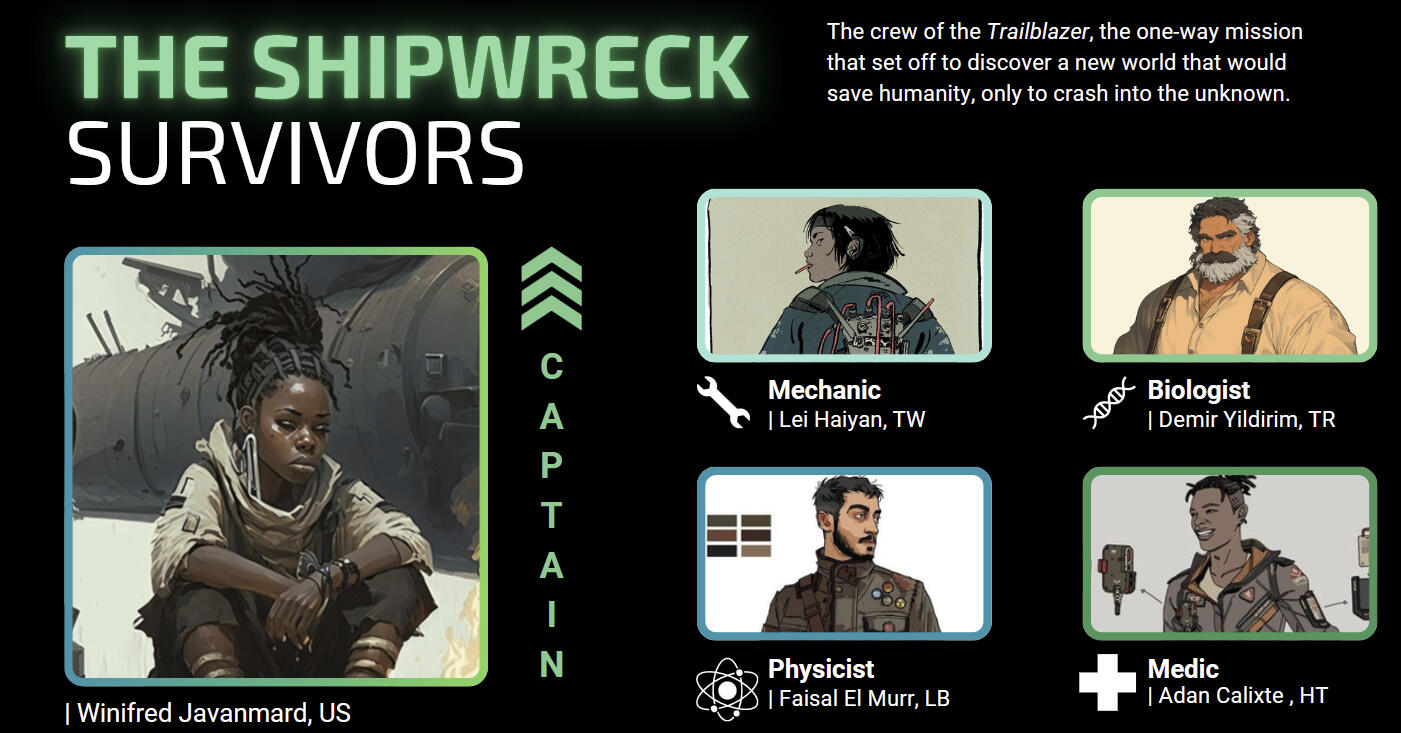
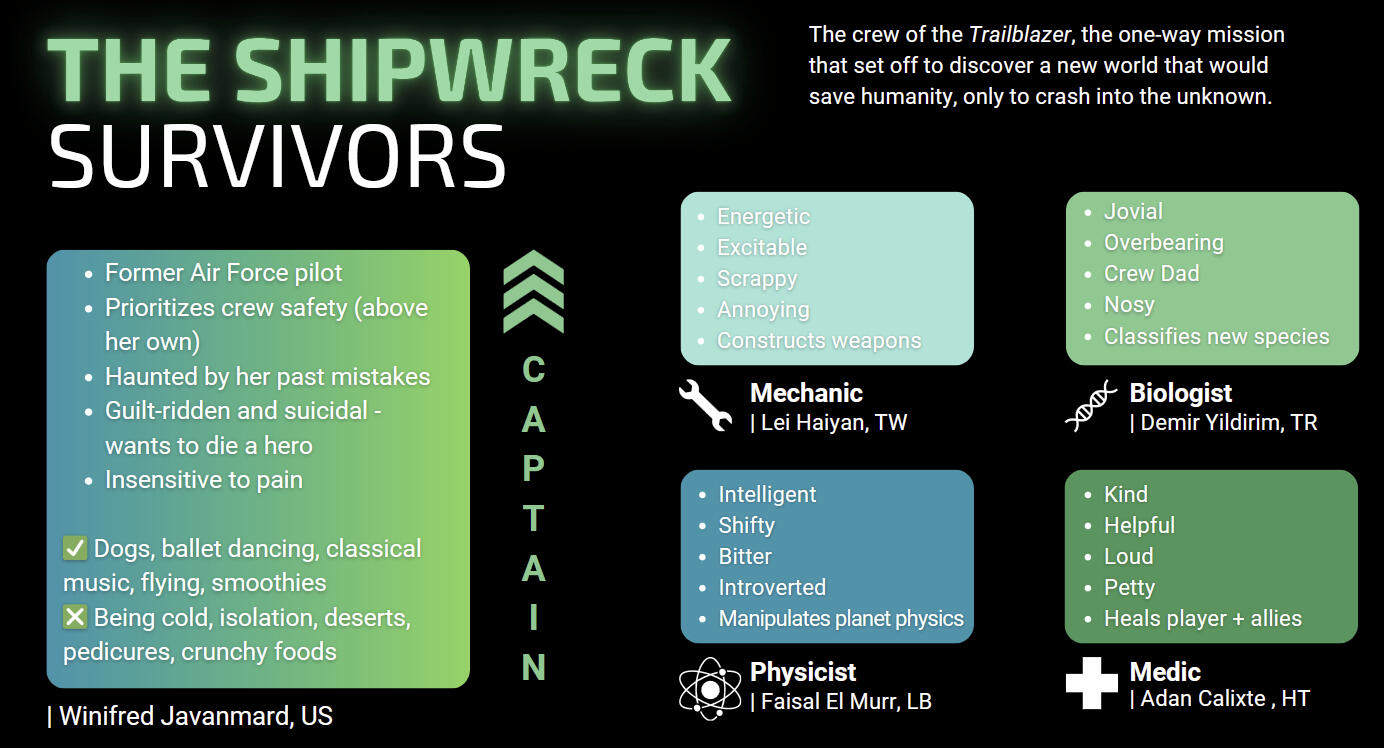
With this mechanic and vibe in mind, I redesigned the native Viridi species to be a fairy-like race to emphasize their connection with their home world, and the invading aliens as a water-based species and completely out of their element. I kept this in mind when I rewrote the background for the player character and her crew - Captain Winifred has a history of dancing ballet before she joined the US military, and her grace lends itself nicely to the aerodynamic world of Viridian Prime.
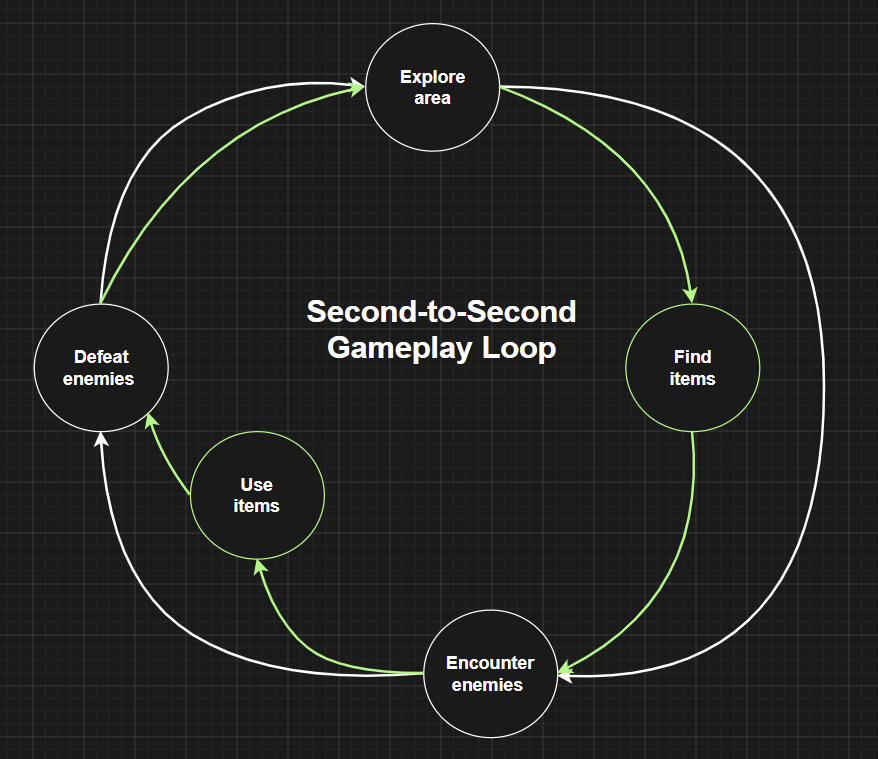
Combat Mechanics + Biotech
- Acrobatic movesets and skills to learn
- From swords and axes to rifles and grenades
- Upgrade and craft weapons with alien biotechnology

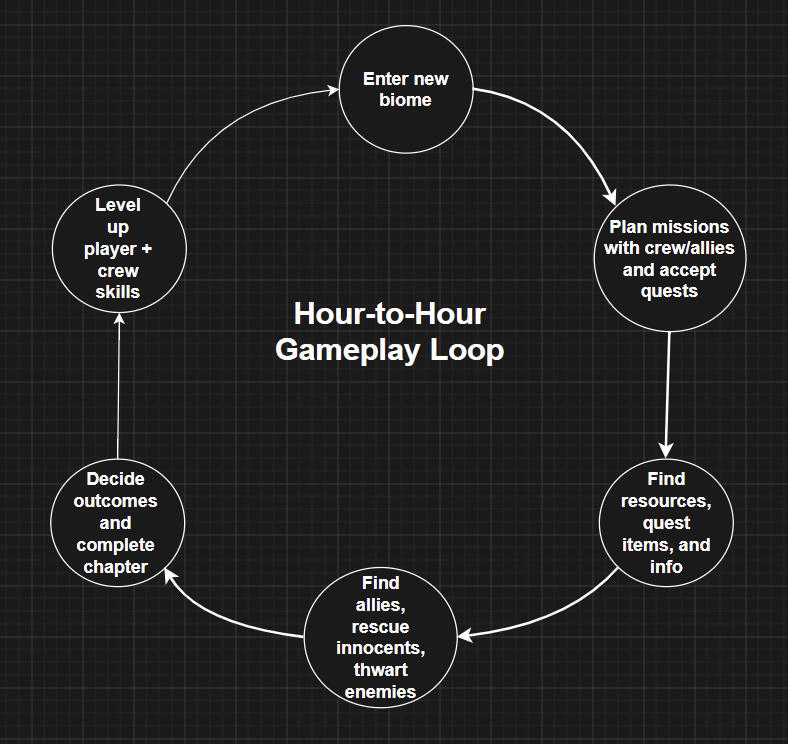
Pitch Deck
Game Design Document
Nell Baran
Game & Level Designer
Searching for a position to express my passion for design, creativity, and inspiring the next generation!

About Nell...
Embark on a journey with me to bring my creations to life! And maybe let them kick you around a little. (Or vice versa.)
Hi, I'm Nell, an astrophysicist turned game designer (: I began my studies at Penn State University where I obtained a Bachelor of Science in Astronomy and Astrophysics (2020), and took part in a lot of research centered around astronomical instrumentation (fancy telescopes) and the detection of habitable planets (potential ~alien worlds~). I went on to do a Masters in Space Science and Technology at L'Observatoire de Paris (2022), which involved even more research, and lots of coding! Check out some of my research here!
Not only did I not find any aliens, but I realized I was missing something creative in my life, so I decided to take my skillset in a different direction: game design! The more I thought about the idea, the more compelling it became until I found myself searching for programs and certificates where I could learn these skills more formally. Eventually, I came across CG Spectrum's Game Design Foundations certificate, which I completed in July of 2026. With a few projects under my belt, I'm more excited than ever to take my first steps into the video game industry!
When not making or playing games, you can find me reading scifi/fantasy, writing fiction, drawing (digital and traditional), rock climbing, knitting/crocheting, playing ice hockey, running around with my dog, or contemplating the fact that everything we know and love really is just kicking it on this pale blue dot, huh :0